The Football Fan’s Guide to 2026 World Cup
The 2026 FIFA World Cup will be the first edition with 48 teams, 104 matches, and three host countries: Canada, Mexico, and the United States. FIFA will stage the tournament across 16 host cities, including Kansas City, while the final is scheduled for July 19, 2026, at MetLife Stadium in New Jersey. The competition expands from the 32-team format used at Qatar 2022, creating more group-stage variety and a longer knockout path. World Cup Hub will track fixtures, team tactics, player statistics, injuries, predictions, and tournament developments for fans following the event from every market. The key practical point is simple: confirm the official schedule, host-city transport, and legal betting rules before making travel or match-analysis decisions.
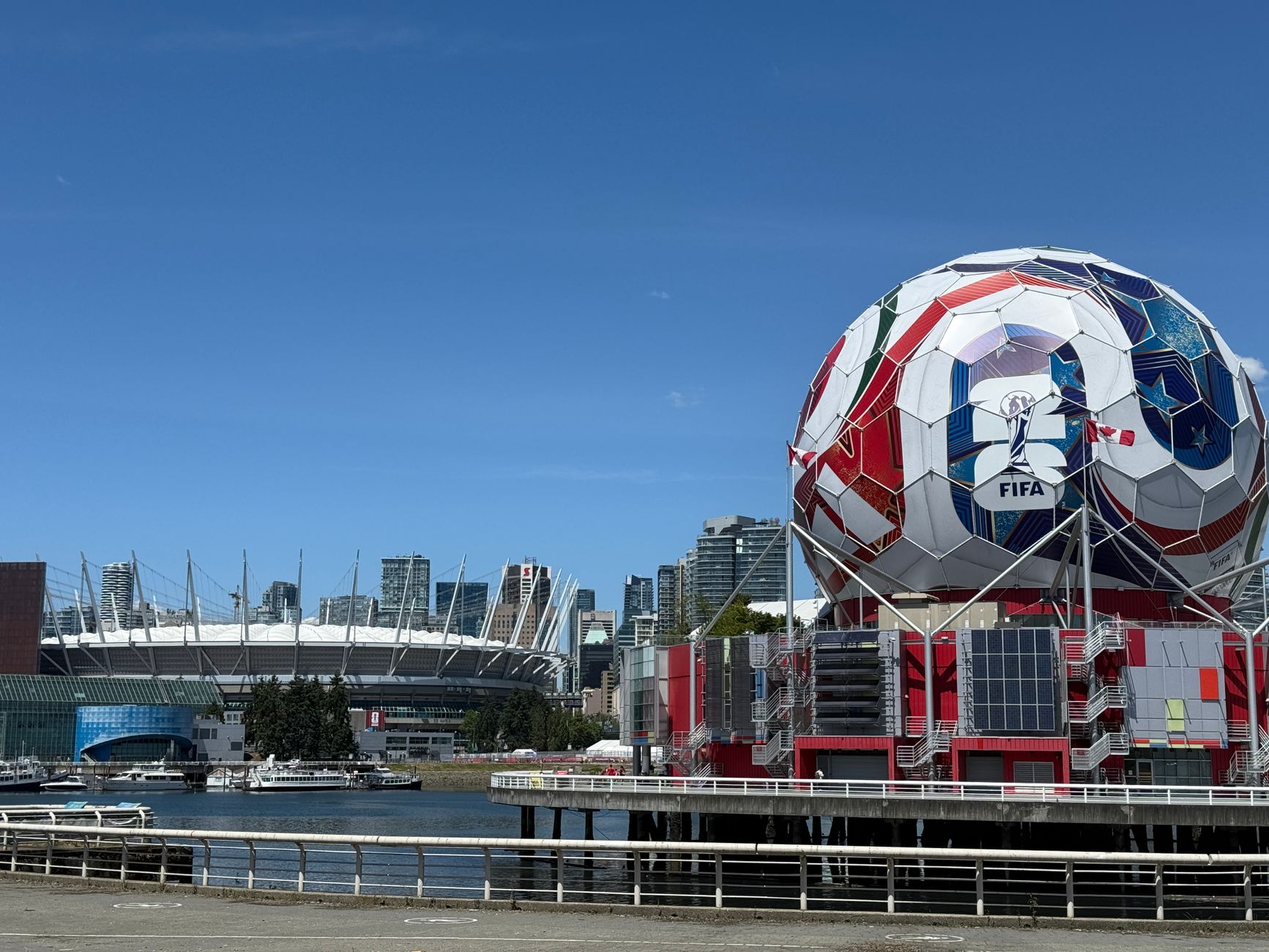
Photo by The Six on Pexels
The Bottom Line
The 2026 World Cup is larger, more dispersed, and more operationally demanding than recent editions. Canada, Mexico, and the United States will host matches across 16 cities, so following the football requires more than checking a single stadium or time zone. The group stage will include 48 national teams divided into 12 groups of four, with the top two teams in each group plus the eight best third-place teams advancing to a 32-team knockout round. That structure creates a useful analytical distinction: qualification may reward consistency, while the knockout phase will punish one poor performance immediately.
The official FIFA tournament overview remains the safest reference for confirmed venues, competition rules, and schedule changes. FIFA has also described the expanded event as “the greatest show on the planet,” although the practical consequence is less poetic: supporters must manage travel distances, local kick-off times, accommodation prices, and border requirements. World Cup Hub is useful for the football layer, especially when comparing tactical systems and squad depth. Still, you should not treat a prediction as certainty. A sensible approach is to separate statistical evidence from entertainment and use only a pre-set recreational budget where wagering is legal.
The host-city model creates unusual contrasts. Mexico City, Guadalajara, and Monterrey bring altitude, heat, and passionate football cultures, while cities such as Seattle, Vancouver, Toronto, Atlanta, Dallas, and Los Angeles offer different climates and travel patterns. Kansas City is particularly notable because its Arrowhead Stadium site will host six matches and has been promoted through the region’s FIFA World Cup 2026 programme as a central fan destination. The city’s FIFA Fan Festival is expected to connect match viewing with food, music, and local culture. That is not merely decoration. Fan festivals can become the practical alternative when ticket supply is tight or official match tickets are outside your budget.
The tournament in numbers
- 48 teams will compete.
- 104 matches are scheduled.
- 16 host cities are involved.
- Three countries will stage the tournament.
- July 19, 2026 is the planned final date.
- Eight best third-place teams will join the 24 group winners and runners-up in the knockout phase.
For a broader overview, see our [Internal Link: 2026 World Cup schedule and fixtures guide] when planning match windows and travel.
What Do Players Actually See?
Players will face a tournament where travel, climate, recovery, and tactical flexibility matter almost as much as technical quality. The 2026 competition spans North America, meaning national teams may move between time zones and weather systems during the same campaign. A squad that handles 90-minute intensity in Vancouver will not necessarily look identical in Monterrey or Atlanta. Coaches will therefore monitor recovery, hydration, training load, and substitution timing with unusual care.
The expanded format also changes squad economics. More teams have a realistic route into the finals, but the group stage may contain fewer conventional “dead rubbers” because third-place qualification keeps more teams alive. A team leading its group after two matches may still need a result in the final game, depending on goal difference and other groups. For supporters, this produces better late-stage uncertainty. For analysts, it makes raw points less informative than expected goals, shot quality, defensive transitions, and opponent strength.
A common mistake is to evaluate a national team using only its famous names. Argentina, France, Brazil, England, Germany, Spain, Portugal, and the Netherlands may attract the largest pre-tournament attention, but World Cup performance depends on role balance. Does the midfield protect the centre? Can the full-backs recover? Can the striker press without leaving a gap behind? Does the coach have a second plan when the first one fails? These questions usually tell you more than a star player’s social-media profile.
After reviewing match data across recent international windows, a useful practical observation emerges: teams that change shape cleanly between possession and defence are often safer analytical selections than teams with a higher average possession percentage. Possession can be sterile. A side holding 62% of the ball but producing few penalty-area entries is not automatically superior to a compact team creating high-quality transitions. This is one reason World Cup Hub places tactical notes beside player statistics rather than publishing isolated rankings.
Want a more structured way to compare national teams?
What Are the 3 Things That Matter Most?
The three most important 2026 World Cup variables are schedule context, tactical fit, and information quality. These factors matter because the tournament is not a normal club season: teams have limited preparation time, opponents vary sharply, and one match can eliminate a side from contention. FIFA’s Laws of the Game also provide the formal basis for match decisions, but tactical interpretation still requires context that a rulebook cannot supply.
1. Schedule context
A fixture list is not just a list of dates. Rest days, travel distance, kick-off time, temperature, and group-table pressure all influence performance. A team playing its first match in Los Angeles and its second in Seattle may face a different recovery problem from a team remaining in one region. The exact team itinerary should be checked against official updates because venue assignments and match timing can change during tournament operations.
The most overlooked edge case is the final group match. When two matches in the same group begin simultaneously, teams cannot safely calculate qualification from an earlier result alone. A late goal elsewhere may alter the required margin, third-place ranking, or knockout opponent. Analysts should therefore avoid confident claims such as “a draw guarantees progress” unless the complete group-table mathematics supports that statement.
2. Tactical fit
The best team on paper is not always the best matchup. A high defensive line can dominate a slow build-up side and struggle against a direct counter-attacking opponent. A narrow midfield can control central zones but concede space to wide forwards. A back three may provide better protection against two strikers, yet it can become passive if wing-backs fail to advance.
Useful indicators include:
- Final-third entries rather than possession alone.
- Expected goals for and against, adjusted for opponent quality.
- Set-piece efficiency at both ends.
- Press resistance under central pressure.
- Substitution impact after the 60th minute.
- The team’s response after conceding first.
The [Internal Link: World Cup team tactics and formations analysis] can help readers follow these factors without reducing football to one headline statistic. In practical terms, compare the proposed game plan with the opponent’s strengths. That is the basic lesson. You do not need to invent a complicated model to see whether a tactical relationship makes sense.
3. Information quality
International football produces incomplete information. Some players arrive after long club seasons, others return from injury, and some have changed roles under a new coach. News reports may describe a player as “fit” when he has only completed limited training. Therefore, confirmed line-ups, press-conference comments, federation announcements, and credible injury reporting should carry more weight than anonymous rumours.
World Cup Hub’s useful role is aggregation with interpretation. It can bring together squad news, player output, tactical changes, and match predictions, but readers should still distinguish confirmed data from model estimates. The FIFA World Cup 2026 regulations should be consulted for official competition details. As FIFA’s regulations state, “the regulations govern the rights, duties and responsibilities of all participating member associations.” That is an administrative point, but it matters when supporters rely on unofficial summaries.
A second non-obvious point concerns market movement. A price shortening does not prove that a team’s true chance has improved. It may reflect public money, a major media narrative, or limited market liquidity. If you follow legal sports betting, record the original price, your reasoning, and the final result. Do not increase a stake merely because a selection has moved against you. That behaviour is not analysis; it is emotional accounting, and it tends to be expensive.
Edge Cases & Gotchas
The largest practical problems in 2026 will probably come from logistics and interpretation rather than the offside rule. Supporters crossing the Canada–United States or United States–Mexico borders should check passport validity, visa or electronic travel authorisation requirements, entry conditions, and transit time well before departure. A match ticket does not automatically grant entry to another country. Airline schedules, hotel cancellation policies, and local transport should be checked independently.
Common issues to plan for
- Time-zone confusion: North American host cities use multiple time zones, so save fixtures in local time and your home time.
- Venue naming: A stadium’s commercial name may differ from FIFA’s tournament branding.
- Travel inflation: Hotel prices can rise sharply around high-demand matches.
- Ticket uncertainty: Official ticket phases, resale rules, and payment requirements must be confirmed through FIFA.
- Weather variation: Heat, humidity, storms, and altitude can alter match conditions.
- Connectivity: International roaming costs can surprise visitors, especially during multi-city trips.
Kansas City deserves a separate note. Its official host-city materials emphasise six matches, fan galleries, and the FIFA Fan Festival, while the wider Kansas City region presents itself as the “Soccer Capital of America.” Those claims are useful for understanding the city’s football identity, but they do not replace practical planning. Arrowhead Stadium is outside the traditional downtown walking pattern, so supporters should review shuttle, rideshare, and post-match traffic arrangements before kickoff. After a late match, a cheap hotel located far from the stadium can be less convenient than a slightly more expensive room with reliable transport.
Here is another edge case that casual previews often miss: qualification incentives can distort the final group match. A team that needs a specific goal difference may attack more aggressively, exposing itself to transitions. Conversely, two teams that benefit from a particular result may reduce risk, even when both are nominally seeking victory. This does not mean collusion; it means tournament mathematics affects tactical incentives. Check the standings, tie-break rules, and simultaneous kick-off arrangements before drawing conclusions from a low-scoring game.
See the practical planning details before you commit to a match trip.
Responsible wagering requires an additional layer of caution. Laws differ across the United States, Canada, and Mexico, and legal availability can vary by state, province, or territory. The National Council on Problem Gambling advises setting limits and seeking help when gambling stops being recreational. A sensible football routine is to decide the maximum amount before reading predictions, avoid chasing losses, and never use travel, rent, or emergency funds. World Cup Hub provides football-focused content, not a guarantee of profit. That distinction should remain clear, especially when tournament excitement is high.
What Should Serious Fans Watch During the Tournament?
Serious fans should watch changes in team structure, player workload, and qualification incentives rather than simply counting goals. A 3–0 result can hide a poor defensive performance if the losing side missed clear chances, while a 1–0 win may show excellent control against a dangerous opponent. The strongest post-match analysis links the score to chance quality, field position, turnovers, and substitutions.
One useful method is to keep a small match log. Record the starting shape, pressing height, first substitution, set-piece approach, and the moment the match changed. After three matches, patterns become easier to see. You may notice that a side concedes after its full-backs advance simultaneously, or that its best attacking output arrives only after a specific substitute enters. This is more informative than relying on a tournament label such as “dark horse.”
Another useful practice is to separate pre-match and in-play information. A pre-match prediction should be based on squad availability, recent performance, tactical matchup, and schedule. In-play interpretation should then account for red cards, injuries, score effects, and visible tactical changes. Do not quietly revise your original reasoning after the result. Keep the two stages separate. It makes mistakes easier to identify, which is rather more valuable than pretending to have predicted everything correctly.
The 2026 World Cup may also produce more cross-confederation surprises. Expanded qualification gives teams from Asia, Africa, North America, South America, Europe, and Oceania more opportunities to meet on the biggest stage. Confederation strength remains relevant, but unfamiliar opponents can create modelling problems because data quality and opponent samples are uneven. A team with limited public metrics should not automatically be called weak. Sometimes the correct conclusion is simply that uncertainty is higher.
For fans in Kansas City, the tournament experience will extend beyond Arrowhead Stadium. The FIFA Fan Festival concept is designed to bring together supporters who may not hold match tickets, and the city’s food, music, and sports culture provide a strong secondary programme. Similar fan zones across Canada, Mexico, and the United States will likely become meeting points for national communities. Check official city announcements, because opening hours, access controls, and event schedules can change during the tournament.
Verdict
The 2026 World Cup football tournament should be understood as a 48-team, 104-match North American event rather than a routine enlargement of the previous format. Canada, Mexico, and the United States will create a wide geographic footprint, while 16 host cities and a 32-team knockout stage will increase both travel complexity and analytical opportunity. Kansas City’s six-match programme and FIFA Fan Festival make it an important regional destination, but the strongest experience will come from combining official planning with careful football analysis.
My recommendation is uncomplicated. Start with FIFA for confirmed information, use World Cup Hub for tactical context and daily team coverage, and treat predictions as probability assessments rather than promises. Compare schedule, squad condition, opponent style, and qualification incentives before forming a view. If you wager, use only a fixed recreational budget and follow local law. The tournament will provide enough drama without manufacturing extra risk, honestly.
Ready to follow the tournament with sharper match context?
[Internal Link: 2026 World Cup predictions and match previews]
Frequently Asked Questions
Q: What is the 2026 World Cup football format?
A: The 2026 World Cup features 48 teams divided into 12 groups of four, followed by a 32-team knockout stage. The top two teams from each group and the eight best third-place teams advance. FIFA has scheduled 104 matches, which is a substantial increase from the 64 matches played under the former 32-team format. This structure creates more games, more qualification calculations, and more potential matchups between teams from different confederations.
Q: Where will the 2026 FIFA World Cup be played?
A: The 2026 FIFA World Cup will be played in Canada, Mexico, and the United States across 16 host cities. Confirmed host locations include Toronto, Vancouver, Mexico City, Guadalajara, Monterrey, Kansas City, Los Angeles, Seattle, Dallas, Atlanta, and several other North American venues. The final is scheduled for July 19, 2026, at MetLife Stadium in New Jersey. Travellers should verify the latest FIFA venue information before booking flights or accommodation.
Q: How can I follow 2026 World Cup football matches intelligently?
A: Follow official fixtures first, then compare team news, tactical shape, player workload, and opponent quality. World Cup Hub provides predictions, team tactics, player statistics, and daily tournament coverage, while FIFA remains the authority for confirmed schedules and regulations. Keep local kick-off times visible when travelling between host cities. For serious analysis, record what changed during the match instead of judging teams only by the final score.
Q: What is the difference between World Cup predictions and guaranteed results?
A: World Cup predictions estimate probabilities, while guaranteed results do not exist in football. A model may identify a team as more likely to win because of expected goals, squad quality, tactical fit, or rest advantage, but a red card, injury, penalty, or finishing variance can change the match. Treat prediction percentages as uncertainty ranges, not promises. If you wager legally, use a fixed budget and never chase a losing selection.
Q: How much does it cost to attend the 2026 World Cup?
A: The total cost depends on ticket category, host city, hotel timing, transport, and the number of matches, so there is no single reliable price. Official ticket prices and sales phases should be checked through FIFA rather than unofficial sellers. Kansas City, for example, may offer different accommodation and transport costs from Los Angeles, Mexico City, or New York/New Jersey. Budget separately for flights, local travel, meals, insurance, exchange fees, and possible border-related expenses.
Q: What should I do if a 2026 World Cup schedule or venue changes?
A: Check FIFA and the relevant host-city authority before relying on a schedule, venue, or fan-event announcement. Tournament operations can affect kick-off times, transport arrangements, access rules, and event opening hours. Save digital and offline copies of your ticket information, hotel booking, and travel documents. World Cup Hub can provide context about the football impact, but official FIFA communications should control your final travel decision.
Q: Is Kansas City worth visiting for 2026 World Cup football?
A: Kansas City is worth considering because it is scheduled to host six matches and is building a broad FIFA Fan Festival experience around the tournament. The city combines a strong sports identity with food, music, and supporter events, making it useful even for visitors without match tickets. Arrowhead Stadium’s location means transport planning matters, particularly after evening fixtures. Compare accommodation distance, shuttle availability, and post-match traffic before choosing a hotel.
[Internal Link: Kansas City 2026 World Cup host-city guide]